Friday, June 30, 2006

The Sacramental Principle - By the Rt. Rev'd Albert Chambers

Here is a cool article by the Rt. Rev'd Albert Chambers that I found on the Church of the Resurrection's (NYC, Fr. Barry Swain, SSC, rector) website. Chambers was once the rector of this parish. More important, he was one of the three bishops who consecrated the first four bishops of the "continuing church" in the mid-seventies.

The Sacramental Principle

by The Rt Rev’d Albert A. Chambers,

Bishop of Springfield 1962-1972

Rector of this Church 1949-1962

“That they may by your good works, which they shall behold, glorify God on the day of visitation.”

Good works do not necessarily mean the moral and ethical lives we lead. One can never tell how far-reaching the influence is of our good deeds. We would not minimize it, or belittle it. But there is another kind of bearing witness and another kind of giving glory to God which is inherent in our worship.

William Earnest Hocking once wrote, “Symbols without explanations run to theological mummery; explanations without symbols run to philosophical dry bones.” If you have two hands, why use only one?

In the Book of Common Prayer, embodying the Catholic heritage of the Church, the sacramental principle is preserved. Outward and visible signs are the effective and divinely instituted means of bestowing inward and spiritual grace. That is what a Sacrament is. Yet to use the outward and visible thing without knowing its meaning is mummery; to neglect the outward and visible thing is to lose one’s self in philosophical “dry bones”. Having two hands, why use only one?

The sacramental principle is natural and reasonable. We who are within the Catholic tradition believe it to be necessary. The inner response to the outward and visible is essential. The outward and visible augments the inner response.

We can understand better the means of Grace instituted and commanded by Our Lord if we begin with ourselves. We can call this the sacramental principle on the human level. We do not believe this irreverent or sacrilegious if it helps us to understand the mystery of the sacramental life.

We begin simply by looking at man as he is. Man lives in two worlds at the same time: the material and the spiritual.

The material world is appreciated and apprehended through the five senses: hearing, seeing, tasting, smelling, feeling with our bodies. It is a concrete world. It is made up of things. These things can be measured, described, compared. They are concrete. This world includes our bodies as well as so-called inanimate objets.

The spiritual world is invisible. It is appreciated and apprehended through the activity of the soul, the spirit, the mind. It is abstract. It cannot be measured, described, compared – though it can be demonstrated. In it are all the qualities of the spiritual life: love, goodness, kindness, truth, beauty, forgiveness, understanding, knowledge, joy, happiness, peace, and many other realities not describable. They are derived from God, who is the source and creator of them, even as he is the source and creator of all in the physical world.

The materialism of our present day may have its roots in the fact that the physical world is measurable and can be described precisely, as by the use of mathematics, whereas the spiritual world, eluding the senses, is incapable of measurement. One can buy a dozen eggs, or a bushel of apples, or weigh 160 pounds or be 5’10” in height. These are accurate descriptions. But one cannot say that he has a bushel 0f love, or a dozen of beauty, or that he is happier than someone else, or that he loves his wife more than someone else loves his wife. Yet which of the two worlds in which man lives is more important?

Without belittling the physical world (which would necessitate belittling our own bodies) we recognize the fact that the material, physical world is transitory and temporary, whereas the spiritual world is eternal. This we emphasize in order that we may have the proper perspective and may maintain the proper emphasis in our living.

Man’s life in these two worlds is fulfilled through the sacramental principle on a human level. That which is within must be expressed by that which is without. So we use the outward and visible as the means of communication. A thought in the mind or a feeling in the heart is expressed by the outward and visible. Life is lived day by day through the use of these outward signs.

Speech is a sacrament on the human level. It uses a physical apparatus to communicate the ideas or thoughts or feelings that are within and are invisible. The written word is a sacrament on the human level, because it, too, is a vehicle of communication – the means by which the unseen becomes visible. An embrace, a kiss, a handshake: these all partake of the sacramental character. Everything we do or say uses the outward and visible thing as the means of expressing that which is within.

There is a further observation. Not only do we express ourselves through the outward and visible, but we are also impressed by it. Speech, the written word, the embrace, make their impression upon us as we receive the communication intended for us. “A thing of beauty is a joy forever.” A symphony, a landscape (to take the obvious) impresses us – “does something to us –for us” Thus we respond to people, their attractiveness, and the outward and visible manifestation of their characters.

The whole process of communication is thus in reality a simple one. This is the way we are created. It is a process so simple and natural that we accept it without thought. The physical world gives us the tools and instruments with which to express ourselves one to another, and by which we are impressed one by another.

Is it unnatural therefore to expect that God would use this natural process in his relationship to us, and that we should use it in our relationship to him? We should not be surprised, therefore, to find sacraments in his Church, instituted by him, commanded by him, to be a means of Grace, a means of communication by which we meet him, by which he expresses himself to us, by which we are impressed by him. And we should not be surprised to find these same sacraments a means through which we are privileged to express ourselves to him, and by which we strive to impress him with our response to his love for us, our worship and our devotion.

Because He is pure spirit and we are bidden to worship him in spirit and in truth, should we limit him to “spiritual mental telepathy” and reject the outward and visible means which he might use? This would seem to be unnatural and unintelligent, to say nothing of its being disobedient. He did command – “preach, baptize, teach”. He did say – “Do this in remembrance of me”.

We rejoice in the sacraments of God’s Church, because his sacraments are means by which he communicates his life and power to us. We rejoice because he lets his sacramental grace pour into our hearts to bring the miracle of rebirth and the remission of sin in Holy Baptism; the Heavenly food in the sacrament of the Altar, the living bread which comes down from Heaven; the out-pouring of the Holy Spirit in Confirmation; the blessing and sacramental grace in Holy Matrimony; the special gift of the Holy Spirit given in Holy Orders; the absolution and forgiveness of sins in Sacramental Confession; and the healing power of God in Holy Unction. He uses these means of communicating to man his love, his gifts, his resources. They are also a means by which man lifts heart in adoration and worship to the throne of Grace.

There is another fact, related to this principle, for which we in the Catholic tradition stand, and about which there is much ignorance. It is the use of outward and visible signs in our worship. Merely to illustrate, without attempting to give in any way an exhaustive list of them, we cite a few of the “externals” of our worship.

The use of incense in our worship has an ancient and noble history. Incense is the symbol of honor, or purification. It reminds us that our prayers are rising to the throne of Grace – “let my prayer be set forth in thy sight as the incense, and let the lifting up of my hands be an evening sacrifice”. The use of incense comes to us from the Jewish Church where it was always part of their worship. It was because the early Christians would not burn incense – just a grain of it – to the Emperor that they were martyred. The use of incense is not meaningless. To burn it to the living God is to pay honor and tribute to him. Its use is abundantly justified.

The bodily acts of devotion common to our heritage are significant: the genuflection, for example – “at the name of Jesus, every knee shall bow, of things in Heaven and things in earth”. We bend the knee to honor his presence when we come into that Presence; we bend the knee to honor him as we approach to receive at the altar rail the Christ who gave himself for us. We stand to honor men of earth, we kneel to honor the King of Heaven.

Making the sign of the cross is also an outward and visible sign, reminding us that we were signed with the cross in Holy Baptism, and that we are not ashamed to confess the faith of Christ crucified. In the early Church the sign of the cross was a secret symbol by which Christians identified themselves to each other. We can thank God that today we can openly and joyfully sign ourselves with the cross in the name of the Blessed Trinity, thus reminding ourselves of God’s presence and bearing witness to our faith in him. There are many other bodily acts of devotion which assist us in our worship because they partake of the abiding principle of daily living, using outward acts to express inward realities.

In our worship of God we use many outward and visible signs. The vestments, the Altar Frontals, the stained glass windows, the beauty of Church architecture and decoration – these all have their rich heritage and meaning, and they all partake of the same principle – to worship the Lord in the beauty of holiness. They are means by which we express honor to him, by which we beautify his holy temple, by which we respond to his love. They all make their indelible impression upon us as they help to lift us to his Presence.

Call these “extra” aids to worship, but never forget their importance. They are simply means by which man can express himself in love and adoration to the God who created him, and by which he can pay him honor. They are means by which he can impress God of man’s response to his love. They also are instruments by which God expresses himself. These outward and visible instruments are made a means of communicating through which God expresses himself and impresses men.

These are good works. These are the things which we can behold. These are things and means by which we can glorify God. To deny them is to deny the means God has put at our disposal in order to deepen our life with him, to respond to his love, and to offer him worship.

Wednesday, June 28, 2006

The Suffering Artist

There is a an article in the news about a London art exhibit that explores the myth of the suffering artist. The curators suggest that artist depression and angst was triggered in part by the church and state buying less and less art, which caused artists to sell less work. Now, there may be something to that, but that's not what I wanted to write about today.

The article got me thinking about the various "Christian Arts" organizations, such as CIVA
and others that purport to help artists and the church reconnect. I have been involved in a number of these organizations, as well as with secular art organizations, and let me tell you they usually do nothing for artists. They have been, in my experience, a big waste of time and money. The church is still buying art - I know, because I used to sell stained glass windows, and I sold a lot of it. But the whole process is tied up with the contracting/bidding world, which most artists know very little about. And the people that run these arts organizations do not seem to know anything about the whole bidding and contracting process either, so individual artists never get the chance to show their work to the building committee, and thus never sell anything to churches. So they, and the leaders of these arts organizations, end up just kind of sitting around and whining about how no one in the church cares about art anymore. Well, that's just not true. Churches are still buying lots of art. Many clergy and laypeople would be open to buying work (such as vestments) from qualified individual artists, just as they are open to buying it from big, impersonal organizations (such as Almy), but they just do not know how to find these artists. So the whole process it rather depressing for everyone. The two need to be able to connect, but these organizations do not make that happen.

I actually have a proposal to address this problem that I will share with the world later - an idea I have been working on for years. But for now, if you are an artist like me, think twice before sending in your membership fee to join these organizations. They really will not help you sell your work to churches, or to anyone else for that matter

Monday, June 26, 2006

APA Provincial Synod Report

My wife and I just returned from the APA Provincial Synod, and I thought I would give a report on it. It was held in Merrilville, Indiana, which is where the pro-cathedral of St. Andrew of the Diocese of St. Augustine is located (DSA hosted the synod). For those of you who do not know, the APA is comprised of three dioceses: the Diocese of the Eastern US (DEUS, Bp. Walter Grundorf, Ordinary), the Diocese of the West (DOW, Bp. Richard Boyce, Ordinary), and the non-geographical Diocese of St. Augustine (DSA, Bp. Larry Shaver, Ordinary). DEUS itself is further divided into about nine deaneries. I do not know if there are any deaneries in the other dioceses. Before the provincial synod, the three dioceses had their diocesan synods.

The theme of the synod was “Faith and Mission”, and it was abundantly clear from the proceedings that the APA is thoroughly engaged in “faith and mission” on a variety of levels. There was lots of good news to report. Donations to the dioceses were up significantly. There are several new buildings going up (or that went up) since 2004 (four in DEUS). The provincial standings are as follows:

Total Parishes and Missions: 67 (up from 54 in 2004)
Total Members: 6,000 (up from 5,000 in 2004)
Total Deacons and Priests: 126 (up from 94 in 2004)
Total Bishops (active and retired): 10
Total Postulants: 30 (in various stages and in various programs)

(NOTE: The bishops read through the lists so quickly that I barely had time to write the standings down, so please excuse any inaccuracies. In the future, it would be helpful if a handout were distributed that contained the vital statistics.)

Visitors included some REC clergy, Bp. Royal Grote (REC), Fr. Amos of Abp. Akiola’s American church, the Rt. Rev’d Archimandrite Lev of the Ukrainian Orthodox Church (representing the Ecumenical Patriarch), as well as a delightful SSC priest of the ACA out of Detroit. Fr. Amos read an official greeting from the archbishop. Highlights from the last two years include the Covenant Union with the REC and the Anglican Province of Nigeria; and the Common Cause Partnership, which includes the APA, REC, FiFNa, AMiA, and the ACN. The Anglican Federation, which the APA and REC started as a way to get the various “continuing” jurisdictions to work together without actually having to unite, and which has Abp. Gregory Venables serving as primatial patron, has attracted the interest of the Diocese of the Holy Cross and the ACA.

Various Items of Interest:

Positive reports were given on APA mission efforts in India, Fiji, Haiti, and elsewhere, though it would have been nice to have everything laid out in an information sheet or something. I personally knew nothing about the Church in India or elsewhere. Now I would say I know a little something. I think that the more people know about such missions, the more likely they would be top donate more time and money to them. Other mission efforts include supporting the Anglican Relief and Development Fund, which was established by the ACN as a way to provide support for needy people in third world countries, and so the people in those places do not have to accept money from heretical ECUSA dioceses.

Bp. Shaver, noticing the lack of young laypeople present, recommended that each diocese appoint a task force to get more lay youth out to the synods.

Bp. Grundorf noted the success of the APA/REC pension fund. Every parish has to contribute 10% of their clergy’s stipend to this fund (this is over and above their pay). This will provide financial security and great benefits for clergy down the road. To date there is still no diocesan health plan, but various people have been reviewing available options here and there.

As for clergy and clergy-related news, I was impressed at hearing of all of the various clergy retreats and quiet days that were held in the various deaneries (in DEUS). That shows how committed the clergy of the APA are to spiritual growth and development. Church planting and evangelism is very high on the list of priorities, with new missions forming regularly. The missions that have been formed in the last two years are doing extremely well and growing. There are plans for missions in a number of different areas around the country. And since God is blessing the APA with many vocations, we will, Lord willing, have the manpower to bring these missions about. Related to vocations, the Board of Examining Chaplains of DEUS require seminary degrees of all candidates for Holy Orders. That is a good policy to have.

Music for the liturgies was provided by the choir of St. Andrews School, an APA classical school out of California. They did a phenomenal job of leading the Anglican chants at Matins and Evensong, and singing special music during the synod mass. There special music piece by Tallis at the synod mass was particularly delightful.

I was blown away by an impromptu performance of the American songbook by the Rt. Rev’d Robert Samuel Loiselle on a grand piano in the lobby on Thursday evening. +Bob was an entertainer on Bourbon Street for many, many years, and it really shows. He is a great singer and an astounding pianist. I wish I had my video camera!

There was nothing extremely disconcerting that happened, though a few things did bother me. The liturgies were all pretty sloppy – especially the daily ones – which was very unfortunate. Organizers didn’t adequately manage time limits of speeches and sermons, so various events went on longer than necessary. The logistics of the liturgies was poorly thought out: when to kneel/stand; how to receive communion; where to have them; where to sit; etc. Here in Maryland we managed a much more diverse group of people at the joint APA/REC Holy Eucharist on Trinity Sunday Evening, and it went extremely well, and everything ran right on schedule. Why? Because we carefully planned everything out. Planning always pays off. It troubled me to hear of one DEUS parish that had begun using “altar girls”. I think that sets a bad and dangerous precedent, and I shall be most disappointed if other APA parishes follow suit. Personally, I don’t think many will, but one can never be too sure. Having more informative handouts and passing out updated clergy/church rosters would have been nice too. There is a lot going on, but the word doesn’t always get out. We need to work on that. Those who took buses from the airport to the hotel ran into numerous difficulties (my wife and I drove, so we were spared all of that).

So overall, the health of the church is good and the synod was fine. Basically, we are a small but growing bunch of traditional Anglicans striving to be faithful to where God has called us to be, and trying to spread the gospel of Jesus Christ in word and sacrament. May God grant us His grace and mercy to be a light for Him in this world, and to lead more and more people to His blessed son, Jesus Christ, the one and only savior of the world.

Sunday, June 25, 2006

St. Mark's Church, Vero Beach, Florida

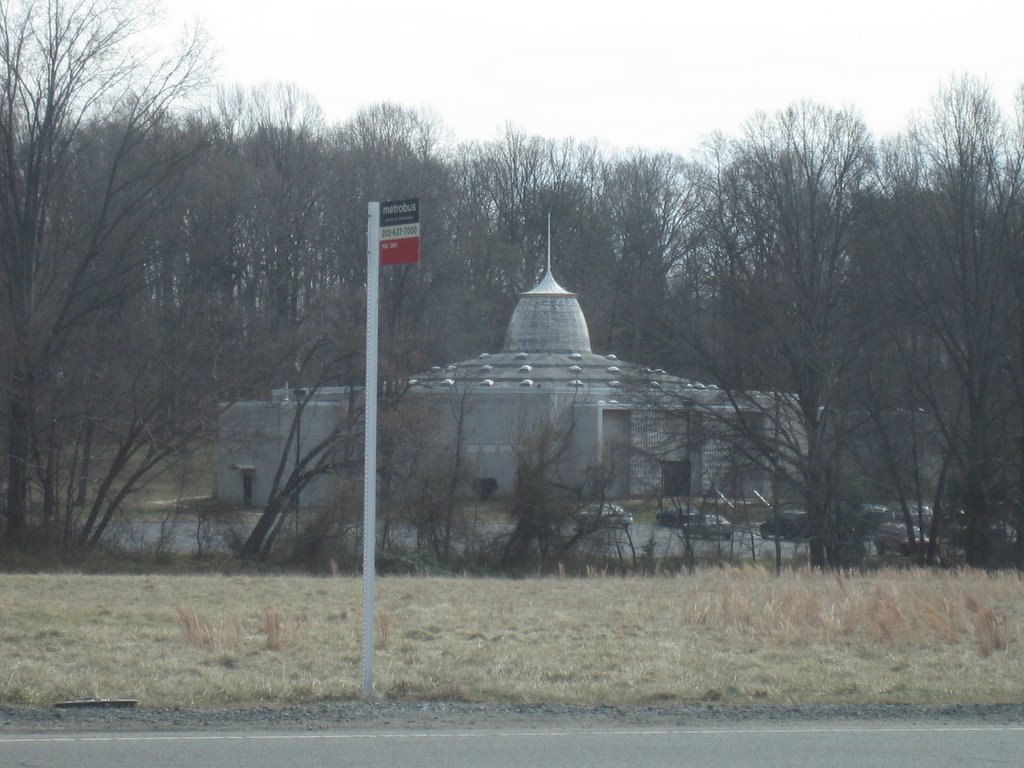
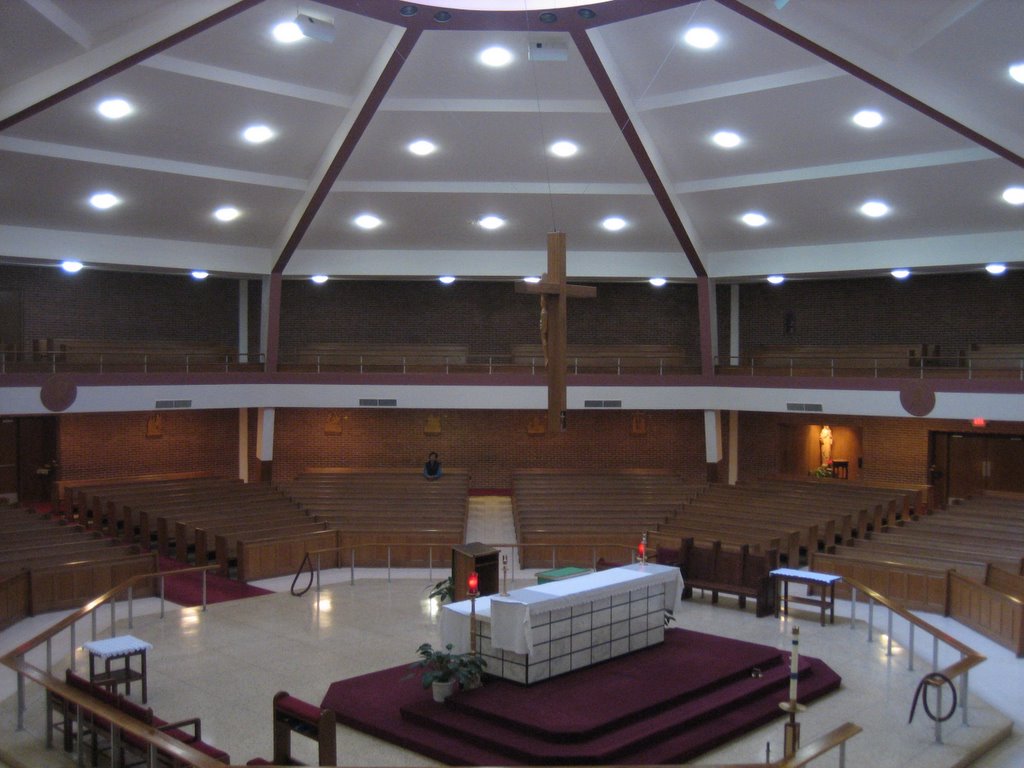
Per some requests, here are a few pictures of the interior of St. Mark's Church, the APA parish where I will be serving as curate beginning in September. There is another chapel that I don't have a picture of, and I do not have close ups of the fantastic stained glass. But this gives you a general idea of of the place. This building was erected in the last couple years, and it shows what can be done when people give generously of their time and resources for God's work.


New Anglican Blog

Here is a new Anglican blog that looks like it will be very good:

http://anglicancleric.blogspot.com/

I had the priviledge of meeting the priest/author at the APA synod. He was wearing a sharp looking "Canterbury cap" at the synod eucharist. I'd never actually seen one in real life before. Hmmm, maybe I ought to buy one too!

Monday, June 19, 2006

APA Synod this Week and Other News

My wife and I will be out in Indiana this week at the APA synod. I'll try to send an update, perhaps. I don't know that there is anything pressing on the agenda, which is fine. "No news is good news", as the old saying goes.

I have been reading about the aftermath of the PB election in ECUSA (or TEC, or whatever they call themselves now). Seems like a lot of people are pretty angry about this, and that ECUSA, in its arrogance, chose yet another course of action that would alienate as many Anglicans in the greater communion as possible. Of course, one could see this coming. Since they began "ordaining" women in the late 70's, it was only a matter of time before they'd have a female PB. Those within ECUSA who are miffed at this should have considered that a woman could eventually be elected to this post. Women are ordained as priests and bishops... so why forbid them from becoming PB? That said, it would seem that a more cautious path at this time in terms of "getting along" with the rest of the Anglican/ecummenical world would have been to ordain a moderate male, but ECUSA has not showed discretion in the past, so why expect them to do so now? What does this mean, if anything, for continuers? Who knows? Many outsiders assume that everytime there is an ECUSA meeting where they do something crazy and decide to ordain cats or something that continuing parishes get a huge influx of new members. That is not always true. Sometimes groups leave ECUSA parishes and form AMiA parishes, or they just join other denominations, or they just stay in ECUSA and suffer in silence, etc. We continuers usually do get a few new members here and there, but my experience - which is very small, mind you - has been that we do not get tons of new members. Switching from ECUSA to a continuing jurisdiction can be quite a change: we use the old BCP; we don't do "praise and worship" songs; we don't ordain women - even if they are conservative theologically (women do not even serve at the altar); the list could go on. So it is not always an easy transition. Anyway, I hope that God gives His grace to those in ECUSA and helps them figure out what, if anything, to do next.

Finally, I am thrilled to report that my old college friend, Jeffrey Baus, is heading off to Nashotah House this fall to study for the priesthood under the auspices of the Diocese of Quincy. He is a good man and wil be a great priest someday. Please keep him in your prayers, and look for his new blog he says he's going to start once he's there. He'll be joined by my buddy from St. Alban's, Don Sackett, who will be starting his master's at Nashotah this fall for the APA Diocese of the Eastern US. Don will be a good, holy priest as well.

Saturday, June 17, 2006

New Curacy Position

This August my wife and I will be packing our bags and moving down to Vero Beach, Florida and to St. Mark's Anglican Church, where I will serve as curate under Fr. Mike Ward, SSA. It goes without saying that we will miss everyone at St. Alban's Joppa, MD, which has been wonderful, nurturing parish home for several years now. We'll also miss the area APA and REC clergy and parishes, Mt. Calvary Church (FiFNa), the All Saints' Convent, and everyone else, as well as being so close to Washington, DC and New York City. But this new opportunity is from the Lord, and so ultimately we are excited. We are really looking forward to experiencing new things, a change of pace, and being able to minister in the "sunshine state" in the name of Our Savior, Jesus Christ. Please keep us in your prayers.

BCP Update/Revision

On the Faith and Life e-mail discussion board, which is for APA and REC clergy, there has been discussion recently about prayer book revision. Personally, I do not think we need a major revision of prayer book. That said, I would like to see a few little additions and changes here and there if possible. Here's a few I thought of over coffee this morning:

1) Expand the kalendar to include the saints days as found in Lesser Feasts and Fasts

2) Make certain parts of the mass optional under certain circumstances as the Decalogue is (e.g. the Summary of the Law, the Comfortable Words, etc.)

3) Allow the Gloria to be moved to the ante-communion if the celebrant so desires

4) Allow for more antiphons for use with the Venite in Morning Prayer

5) Allow for a private for of confession/absolution at Morning and Evening Prayer (similar to the confiteor) for when the person is saying it privately

6) Add the form of Absolution from the 1662 English BCP used in the Visitation for the Sick, and also add a form of private confession and absolution.

7) Expand the catechism

8) Add the Benedictus and Agnus Dei (everyone adds them already anyway)

9) Add the Athanasian Creed

10) Add compline from the Scottish 1929 BCP

Thursday, June 15, 2006

Continuing Anglicans: Slammed in New Book

Here is a link I found on Virtuosity that is interesting. The new "Oxford Guide to the Book of Common Prayer" slams continuing Anglicans in one part as being sectarian and schismatic. If it is "schismatic and sectarian" to follow "the faith once delivered to the saints", to believe in the divine inspiration and authority of the scriptures as interpreted by the ecumenical councils and mind of the undivided church, to believe in the catholic priesthood, and to believe in absolute truth - especially in the moral sphere, then I am proudly schismatic and sectarian!

Tuesday, June 13, 2006

Good Preachers

I love watching reruns of Archbishop Sheen's show "Life is Worth Living" on EWTN. He is such a good communicator, combining great insights with grandiose gestures and a few well-placed jokes here and there. In many ways he is my inspiration as I write my sermons. I hope that one day I can be as effective a communicator for the Lord Jesus Christ as he was. (except without the cape)

It seems to me that one of the things that many traditional Anglican churches lack these days are effective communicators. A priest or deacon might be very intelligent, and have a lot of good things to say, but many times they just don't communicate their ideas very well, so parishioners and others don't go away feeling inspired or challenged, and the church doesn't grow too much. Maybe it is a lack of seminary training in that area. Or maybe the sermon is just greatly downplayed in our tradition because good, meaty sermons are thought to be too "Protestant". But the sermon is a supremely important part of the liturgy as the fathers of the Reformation believed, and as the fathers of the liturgical movement and Vatican II believed. There is quite an art to good oratory. St. Peter's sermon on the day of Pentecost led to three thousand people being baptized! That is good, spirit-filled communication, and that is what the church needs in this day and age.

Saturday, June 10, 2006

Icon Writing and general Art Update

Well, it has been several months since I've started icon "writing" (painting), and I making good progress in some ways, and not so good progress in other ways. So far I have done five icons, and am working on my sixth. The most difficult parts about it for me are:

1) etching the image into the wood - it is hard to get precise lines at first... sometimes the awl gets away from you, and a line gets unintentionally lengthened, or goes in the wrong direction, or something

2) painting on such a small scale - it's quite difficult and laborious trying to paint small facial features so they look good

As someone with a broad background in fine art, and especially in painting, I have found the egg tempra medium to be really great to work in. The amount of detail, and subtle textures that one can acheive with it are really amazing. I can see why Andrew Wyeth uses that medium for his major works. I might try some other types of paintings in this medium at some point. One of the interesting things I have noticed in studying various types of icons is that the east and west had an almost identical artistic tradition up until the Italian Renaissance. The work of Duccio (proto-Renaissance Siennese painter), is very similar to that of his contemporary Byzantine/Greek counterparts.

Anyway, once I am done all of these (all the icons I've done so far are 9"x12") I will try some larger scale ones, and then maybe I will have a show of them sometime next year. In other artistic news, I recently sold my "Purgatory" painting, which I did while in seminary. It was part of a series I did on the "stages of death" - the others in the series being "Alienation", "Death", "Hell" (destroyed), "Purgatory" (sold), and "Salvation" (sold). NB: I just tried to make a link to it, but for some reason it's not working. I will try to get it up soon. Anyway, it was exciting to sell this piece, as I've come close to selling it a few times. It is an interesting painting and very near and dear to my heart. In some ways it foreshadows where I want to eventually go with my icon painting.

I will be having a show in Bel Air (Maryland) in August at the Liriodendron art gallery, which will consist of recent cityscapes. More information will be posted about it in the coming weeks. And the best news of all, my lovely wife is poised to have my updated art website up in a few more weeks, which, of course, I will link to from this blog.

Wednesday, June 07, 2006

Ordination

This weekend a good friend of mine from my seminary days will be ordained to the Roman Catholic priesthood. My wife and I hope to attend his ordination. He is being ordained in a pretty liberal diocese, but they have a new bishop who is trying to clean things up, so I think he will prosper. He is that rare cleric who is both committed to his principles and to what the RC Church teaches, but is also pastoral and can see "the big picture". I hope and pray that he will have a great ministry.

I have seen so many men prepare for holy orders, both in the Roman Catholic Church and in the continuing Anglican Churches who have "not made it". With many of them the craziest stuff seems to happen to thwart them on their way. It is as though Satan is working overtime specifically on them to prevent them from being ordained, and so from helping others draw near to Jesus Christ. The icon to the left always reminded me of this. Imagine the men as "aspirants and postulants" who are climbing up the ladder, seeking to be ordained, but devils are trying to pluck them off. And sadly, many men are plucked off.

Whenever we try to do anything good for God, and for His kingdom, we can be sure that Satan will try to stop us at every step of the way. How much more when a man is preparing for ordination, and preparing to become the "icon of Christ" - a priest.

Tuesday, May 30, 2006

No Kneeling in Orange County

Here is an interesting article from the New Oxford Review about how the Catholic bishop of Orange has banned kneeling during the Agnus Dei throughout his diocese. Traditionalist Roman Catholics are revolting, as one would expect. One person asks: "It's hard to understand why any bishop would prohibit his people from expressing reverence in the way they have done for centuries," said Helen Hull Hitchcock, a founder of the conservative Adoremus Society for the Renewal of Sacred Liturgy in St. Louis." A big stink developed when the pastor of one parish, who offered a popular Latin mass completee with lots of kneeling, retired, and was replaced by a guy who did the regular mass, and followed the bishop's order, and banned kneeling during the Agnus Dei. He promptly canned some servers and council members who refused to comply with this directive. It seems like a bad situation.

But I have to ask: who are these people to blatantly defy the order of their bishop, who was appointed by the supreme pontiff? And who are they to defy their priest, who represents the bishop? The Roman Catholic Church is not a democracy. I sympathize with them for wanting to kneel, but they simply must obey their bishop in mattters like this. And this raises a larger issue. Everyone who enters the Roman Catholic Church must be prepared to acccept whatever the supreme pontiff teaches and declares as truth. In the Archdioces of Baltimore, people entering the Roman Church are required to say: "I believe and profess all that the Holy Catholic Church believes, teaches, and proclaims to be revealed by God." So, should the Catholic Church ever allow priests to marry, or ordain women, the laity better be prepared to accept that. Granted, those are different issues than kneeling or not kneeling, but that's not the point. The point is obedience; will the laity obey those whom the Lord has set over them not matter what they say or do?

Monday, May 29, 2006

Other Interesting Anglican/Church-Related Music

In the spirit of the previous post, I thought I would highlight two other recordings that I have found fun and interesting to listen to.

The first is the Vince Guaraldi at Grace Cathedral (Live). This was a jazz eucharist done at Grace Cathedral featuring the musician who composed the music for the Charlie Brown cartoons. It was done in the late 1960's (big surprise), and so uses the 1928 BCP for the liturgy. They do the fourth communion service, which is an old plainsong melody, to jazz, and have a choir singing the Veni Creator Spiritus and more. One of the biggest highlights, though, is that the infamous James A. Pike is featured on the recording - giving an introduction to the service. You'll notice that he refers to the "Ground of Our Being" (Tillich) to refer to God, which is rather interesting. Overall, it is very well-done, and lots of fun to listen to.

The other recording that I enjoy is the Missa Flamenca, which was composed by the flamenco guitarist Paco Pena. All of the music is flamenco, of course, and the singing is done in the flamenco manner by a specially trained choir. I studied classical guitar in college (under Mario Abril and Julian Gray), so I have a special interest in this type of music. This composition is full of energy.

Now, I would never advocate using this type of music in a "public" traditional Anglican liturgy, not because I think it is morally wrong, but because I don't think the style matches the language and solemnity of the BCP. Guitars and drums, and instruments like them, being used in worship is more a sin against good taste than a sin against God. Music like this fine, however, to listen to at home in a relaxed atmosphere. It may be enjoyed privately in order to help cultivate deeper devotion to God if that is what it does for an individual.

Tuesday, May 23, 2006

Healey Willan


Although I am incredibly sick and tired of hearing the Healey Willan mass setting (the second communion service in the 1940 hymnal), Willan has some other incredible pieces of music that deserve to be listened to. I happen to have the CD on the left, as well as Apostrophe to the Heavenly Hosts. If you are looking for some great Anglican choral music, I highly recommend these two CDs. I think they can be purchased through St. Mary Magdalene church in Toronto (where he served as choir master and organist for years).

Thursday, May 18, 2006

Life as a Newly Ordained Priest

People often ask me what it is like being newly ordained, and if any weird or unusual happens to me more than before I was ordained. Well, yes... once in a while something out of the ordinary does happen. People are afraid to curse around me when I am in my collar; some people are even afraid to curse around my wife; random people wave to me; Latinos tip their caps to you as you walk by; people just come up to me and start telling me about their problems; people ask relationship questions as well as theological questions; I do not have to pay for parking many times at garages and such; non-church going casual acquaintences ask me to do their weddings (actually, that happened even when I was in seminary); I get asked about doing baptisms and such for people not in my parish; and I could go on. It is quite interesting, and a real blessing when these random encounters or experiences open the door for a serious conversation about Jesus Christ, sin and repentance.

By far, though, the craziest thing was when I was in Shreveport once at a business meeting, and a colleague found out that I was preparing for ordination (this was while I was still a postulant, obviously). So he asked me what he should about a localized recurrent apparition (a ghost) of an old lady that was haunting his house. He described the situation to me in great detail - it seemed to be a a completely benign ghost that didn't do too much except "appear" here and there, freaking people out when it did so. As he is telling me this I am saying to myself, "Uhhh, here's what you should do: MOVE!" But I figured he didn't want to hear that, so instead I advised him, as it was apparently not malevalent or causing any real problems, to completely ignore it as much as possible, and under no circumstances ever try to communicate or make contact with it as that is forbidden in the scriptures. I then told him that if he was still freaked out about the whole thing he could call a priest over to bless his home. So far I have not had anything top that.

Tuesday, May 16, 2006

New Alb


I just received from Wippells in England this gorgeous traditional alb that I bought with some ordination gift money... just imagine me wearing it as opposed to a broad. The picture really doesn't do it justice - it is quite extrodinary. The amount of lace is just right. It seems to me that every Anglican cleric should have at least one item of vesture from Wippells.

Collegial Episocpate: The Anglican Way

My in-laws were asked by a Roman Catholic friend what some of the differences between RCs and Anglicans were, and specifically if we Anglicans "followed the pope." I explained to them that the one of the major differences between the two traditions is that, while we acknowledge the Bishop of Rome as being a true bishop, and as having perhaps a position of special honor among the bishops of the world, we do not acknowledge him to have universal jurisdiction over the other bishops of the world and the whole church. The Roman Catholic episcopate is "top down", whereas in the Orthodox and Anglican tradition it is collegial. This developed historically, as there was only one patriarchal see in the west (Rome), and the rest were in the east. So one can naturally see how a top-down system developed in the west.

In recent years we have seen some of the problems seemingly associated with a collegial episcopate - especially within Anglicanism. Some bishops and bishops' conferences, instead of acting "collegially", and considering how their acts and decisions affect the larger church, have acted unilaterally, promoting in some cases heresy and schism (as in ECUSA). During these times many orthodox Anglicans lament that they do not have a central authority figure like the pope to keep the wackos in line, or get rid of them when they promote heresy.

If we think this way, we would do well to realize that just because a few bishops have been promoting heresy and sin in recent decades, and have not been disciplined for this, that does not mean that the teaching of a truly the collegial episcopate is wrong. It means that the bishops are not living up to the true meaning of collegiality, not following their vows, and so on. It is like saying, as many people do, that mandatory priestly celibacy in the RC tradition is "wrong" because vocations are low right now, or because there was a pedophilia scandal. Well, even if there was some connection to these current problems within the RC world and mandatory priestly celibacy, that does not mean that the teaching of the church in that area is necessarily wrong. Correlation does not imply causlity. The same is true for the teaching of the collegial episcopate. The collegial episcopate is supported by both scripture and tradition, and it is one of the great marks of our tradition and that of the eastern orthodox.

Thursday, May 11, 2006

Lower than...

I love it when I hear a new phrase used to describe how low a particular parish is. Some of my favorites have to do with snakes: "That place is lower than snakes' hips." Or, "That place is lower than a snake's belly." Or, "It's snake-belly low." Those are pretty good. But my favorite so far was used by the rector of my home parish to describe some church he had visited once way back when... I asked him about the churchmanship at this place and he growled, "That place is so low you have to crawl in."

Monday, May 08, 2006

New Faces, Old Religion

Today I had the distinict pleasure of being treated to lunch by my spiritual director, the Rev'd Fr. Charles McClean, SSC. Also joining us was a friend who is in the aspirant program for the ECUSA, and the Rev'd Fr. Jason Catania, SSC, who is the new rector of Mt. Calvary Church, Baltimore, MD. As my spiritual director put it, Fr. Catania is "...of the old school." A true anglo-catholic, devoted to the "faith once delivered to the saints." He is bringing about liturgical change to Mt. Calvary. As he put it, "the last vestiges of the new religion are being swept away." The missal is back on all of the altars. The altar cards up. The traditional positions of the sacred ministers have been restored as prescribed in Ritual Notes. The preparation and the Last Gospel have been restored. And soon, the sub-deacon will be in a humeral veil, and so forth. It is wonderful to see. Mt. Calvary definitely went through a phase of liturgical revision, not as bad as some historically anglo-catholic parishes, but it was there. Now all of that will be gone. What will be left of it? (NOTE: I am into liturgical revision, by the way... as long as it is revising the crappy "novus ordo" liturgy... revising it back to the way it should be - to the missal.) Fr. Catania is also a trained, and degreed musician, so I am sure that the already great music at Mt. Calvary will only get better under his leadership. It was also nice to be able to connect my friend with him and Fr. McClean, as they will be able to help him navigate through the process of being ordained in the ECUSA. So all in all, it was a great day. Clergy lunches , by the way, are one of the best parts about being ordained. Sitting around and talking "shop talk" is absolutely wonderful. In closing, I exhort us to say a prayer for Fr. Catania's ministry at Mt. Calvary, Baltimore - one of the great, flagship anglo-catholic parishes in America; to pray for the ministry of my spiritual director, a great man of God and a holy, devout priest; to pray for my friend as he explores a priestly vocation; and lastly, to pray for me and my humble ministry as a priest of the APA (bringing traditional anglo-catholicism to the 'burbs).

Altar Cards & Fiddlebacks

A clergy colleague made an interesting point about why priests should consider wearing fiddleback chasubles and keeping altar cards on the altar. They send an immediate message about what your parish is all about: the orthodox, traditional Christian faith. Plus, one never sees women "priests" in fiddleback chasubles.

Wednesday, May 03, 2006

The Very Right Reverend

The APA has absorbed a number of smaller continuing Anglican jurisdictions over the years, each one coming with a bishop or two. The deal is that the bishop gets to keep his title and dress, but not function as a bishop by doing confirmations, ordinations, etc. unless, of course, previous arrangements have been made. Overall the policy seems to work very well. But sometimes it can make for some unusual titles. For example, Bp. Grundorf recently announced the formation of a deanery in this region of the country. I believe it consists of MD, DE, and DC. And the "dean" in charge of it is a bishop from a jurisdiction that merged with us a couple of years back. So that makes him "The Very Rt. Rev." A.B. He gave me a call the other day and we were joking about it. He'll make a good dean in part because he has a great sense of humor!

Tuesday, May 02, 2006

Motorcycle for Sale - BMW R1100R


I am selling my 1999 BMW R1100R motorcycle (my dream bike). The mileage is about 39K. Motorcycling is a great hobby, and this is a fantastic bike. It really makes heads turn. It has a really smooth ride, and it is very stable and roadworthy. If anyone out there happens to be interested in it please let me know. Here's what it comes with:

1100 CCs
BMW Saddlebags
BMW Aeroflow Windshield
New Metzler Tires
Two Piece Adjustable Saddle
Throttle Lock
Heated Grips
Full Heated Body Suit (socks, pants, jacket, and gloves)
Techllusion Fuel Injection Kit (fixes surging problem)
Maintainence Free Battery
Torque Wrench
Oil Filter Change Tool
BMW Tool Kit

I suppose as an Anglican I should be riding a Triumph, or and old BSA or Norton, but alas, I wanted a bike that was reliable!

Monday, May 01, 2006

A Couple More Pics


Here's one of me and Fr. Chad Jones, SSC, sub-dean of the cathedral in Oviedo, and longtime friend and mentor. Also one of me and Fr. Ray Unterburger, the rector of St. Alban's, Joppa - also an important mentor and friend. And one of me and my wife after my first mass on Low Sunday. I am vested in red because Bp. Grundorf was doing confirmations that day and receiving new members.

Ordination Pictures

Here are some pictures from after my ordination. Unlike many modernistic, novus ordo churches, we do not permit photography during the liturgy, so I don't have any of the "holy huddle", or anything like that. The chasuble I am wearing was purchased in Rome on me and my wife's honeymoon back in October. The custom fiddleback ones that I am having made are not ready yet (won't be ready till July). There are more photos, but I won't flood the internet with them. The first one is of me giving my first blessing to Bp. Grundorf. The group photo consists the clergy of the parish, as well as clergy from various APA and REC parishes. Also represented were clergy from FiFNA. All in all it was a great time. Like other newly ordained priests, I find that the most amazing part about it is offering the Holy Sacrifice of the Mass. It is a truly profound, and beautiful experience. To think that God uses me, a sinful mortal, to make the one, "...full, perfect, and sufficient sacrifice, oblation, and satisfaction for the sins of the whole world..." present on the altar for the salvation of the world is awesome and humbling. I pray that God will help me to be a faithful priest, and dedicated servant for Him and for His people.


Tuesday, April 25, 2006

Ordination Charge

If you go to the Philorthodox blog you can read the charge I was given at my ordination by the Rev'd Fr. Chandler Holder Jones, SSC, who is sub-dean of our cathedral in Oviedo, Florida. I hope to have some pictures and thoughts posted soon!

Monday, April 24, 2006

Hip Hop Prayer Book

I found this Hip Hop prayer book while looking up 1940 Hymnals on the Church Publishing website. Looks pretty goofy to me. Here is how it translates Psalm 23:

Psalm 23 as adapted by Ryan Kearse
The Lord is all that, I need for nothing.
He allows me to chill.
He keeps me from being heated
and allows me to breathe easy.
He guides my life so that
I can represent and give
shouts out in his Name.
And even though I walk through
the Hood of death,
I don't back down
for you have my back.
The fact that you have me covered
allows me to chill.
He provides me with back-up
in front of my player-haters
and I know that I am a baller
and life will be phat.
I fall back in the Lord's crib
for the rest of my life.

Monday, April 17, 2006

God or the Girl?

There is a really interesting new mini-series on the A & E Network called God or the Girl about four men considering entering Roman Catholic seminary to become priests. As a graduate from a Roman Catholic seminary I find this series quite fascinating. They played two episodes last night, and have two more on tonight. Its just a two-day thing from what the website says, so try to catch it tonight if you can. It is very respectable, doesn't make a mockery of the Roman Church by any strech of the imagination, and is entertaining and educational. The National Conference of Catholic Bishops screened the episodes and have okayed it (of course, this is the same body whose film review arm said the movie Brokeback Mountain was a good film, but I digress). Anyway, I highly recommend this series.

There are so many things to say about the programs I saw last night. Here's a few general observations: Only one of the guys actually has a girlfriend. All but one are rather young.... too young and inexperienced to be making this kind of decision, in my judgment. They are all from pretty conservative dioceses/areas (Arlington, Scranton, etc.). Two, I think, went right out of high school to the minor seminary, so they already have some "seminary" experience.

If you have seen the show, here is my take on the guys. The two that I think should not be priests are Joe, who has major commitment issues and still hasn't found himself despite being 28 years old, and Steve, who seems to be exceedingly vain. The other two guys, I think, could be good priests. Dan is hyped about serving God and the church and already lives in a community of devoutly Roman Catholic religious men, and Mike (the one with the girlfriend) is very level-headed and sensitive... though his spiritual director seems to have some sort of Vulcan mind control over him. Of the four, Dan and Steve seem to have the worst case of "Messiah Complex" (i.e. I will be the savior of the Catholic Church and tell everyone what to believe and how to live). I suppose that is due to their age, though. Hearing it reminded me of an admonition given by one of my seminary professors (a very holy man): he said to make sure that we worked out our own salvation in fear and trembling, and thought about our vocation that way, before worrying about trying to save everyone else.

It is really sad that their denomination makes them have to choose between God and "the girl". Fr. Taylor Marshall asked a while back on his blog what good things Anglicanism has to offer the rest of christendom. One of those good things, though I don't know if it was mentioned, was the option for clergy to marry. The natural desire for men to be with women, both physically, emotionally, and spiritually, should not be denied, or set in opposition to serving in the ordained ministry. That opposition is neither biblical nor patristic. Anyway, this should be an interesting show to follow over the next few days, or for however long it stays on.

U2 Masses


Here is a link to an AP story on U2 masses that some ECUSA parishes are having. These are services where they use music by the rock group U2 for the liturgy. I think some churches have a cover band play the music, while others just spin the CD. U2 has granted there permission for churches to use their music in this way. Many of their songs have a Christian, or generalized religious, or other socially redeeming theme to them. There are even books out on using U2 songs to help write sermons. Now, I like U2, and I even have a few of their CDs on my I-Pod, but I don't think their music is suitable for the corporate worship of the church. The rock and roll medium is too simplistic, market-driven, and transitory to be used for the public worship of the eternal, Triune God of the universe. The banal words to most rock and roll songs draw attention mainly to themselves, and so the song and the group becomes the point of everything... not God. Further, rock and roll music is emotionally driven. The way many popular rock songs are composed (if one can use that word) causes people listening to them to be whipped into an emotional frenzy, clouding reason and intellect. Public Christian worship consists in large part of a perfect balance between reason and emotion. The ECUSA parishes that are doing this have reported that large numbers of young people have been drawn out to the services. But do they continue to come back? Do services that use this type of music have enough spiritual depth to sustain these apparant "conversions"? I doubt it. More important, do the churches holding these services really teach the Christian faith at all, with its great themes of creation, fall, and redemption? If not, then I don't care what kind of music you have playing, people will not come to the church. If there is no spiritual need for salvation, as many mainline churches seem to teach, then why go to church at all?

Thursday, April 13, 2006

Baptisms Down

A news link on New Oxford Review reports that baptisms are declining in many churches... from the Southern Baptists to the Roman Catholics. One of the main reasons this is happening, acccording to the article, is because of interfaith marriage: people marry outside of their Christian tradition - or even outside of the Church - and decide to let their kids get baptized when they feel the time is right. They let it be their childrens' choice. Hmmm, I wonder if they would take one of their sons and say, "Well, let's not raise him as a boy or a girl. When he is old enough he can make his own decision as to which sex he wants to be." Or, "Let's not raise little Johnny to be financially secure and responsible, but instead we'll let him decide if he wants to be poor or middle class." That's what these parents are doing with the grace of God in baptism. They are robbing their children of it. If there is friction about whether or not the child should be baptized, then the couple should not be getting married in the first place. Christians should not marry unbelievers (or even "nominal" Christians) anyway - even as the children of Israel were forbidden to intermarry with the Canaanites. Too many churches do not teach what the scriptures teach in this area, and the world and the Church is worse off for it. In the evangelical/baptist world, I suspect one of the reasons for the downward trend in baptism has something to do with the whole "getting saved" theology. Why get baptized when you don't need it to get "saved". Since their faith is not incarnational, or even anti-incarnational, they see no need for sacraments. The Christian faith is mere assent to certain intellectual propositions, and living a morally upstanding life.

Sunday, April 09, 2006

N.T. Wright and Jackson Pollock

Lately I have been reading The New Testament and the People of God by N.T. Wright. The beginning section of the book deals with hermeneutics. One of the problems people face in reading texts these days is whether or not a text actually refers to anything real. In reading a story about some event, can it actually convey anything truthful about the event, or does it only tell us only what the author is thinking about? Indeed, some are of the opinion that a story/text really tells us about the mind of author, and nothing more, and so they look for clues in the book to find out about the author's personal life. Wright basically says that this idea is a bunch of bunk.
There is an interesting connection here to art history and art interpretation. Some people think that in looking at an artist's work they can somehow find out about his or her personal belief system, or discover what philosophy he or she followed. Theories like that make for interesting reading at times, but it must be remembered that they are always, in the end, merely speculation and theories. With that in mind, Jackson Pollock is a favorite whipping boy of people like Francis Schaffer. They say that his art shows how meaningless he thought life and the world was. But I don't think his work can be written off that easily. His drip paintings are extremely beautiful (you really have to go see one in person), and are wonderful studies in formless painting. They ought to be apprciated for what they are, and not used as a jumping-off point for mindless speculation about his personal life. The same thing is true with reading the NT. It is meant to be read for what it is.

NOR Subscription

Special thanks to St. George the Orthodox, who comments on the blog, for getting me a subscription to the New Oxford Review! Thinking of leaving Anglicanism for the wonderful majesty, uniformity in faith and liturgy, and orthodoxy and traditionalism of Rome? Better subscribe to this magazine first. Rome "ain't all its cracked up to be." I think I might buy myself the Book "Papal Sins" as a little companion piece to this fine magazine.

Friday, April 07, 2006

Passion de Jeanne d'Arc

Tonight we have a post-confirmation age youth activity. This is my kind of activity: we are going to watch the classic silent film "Passion de Jeanne d'Arc", by Carl Dreyer. This movie has quite a history. Dreyer was urged to make all sorts of changes to the film so the public would like it better. He did so, but they lost their edge, and the film flopped. Meanwhile, the few original prints remaining were lost to various fires. But in 1982, an orginal print was found in the closet of an Oslo insane asylum. It was restored, and a fantastic soundtrack was composed by Einhorn (Voices of Light). The restored orginial with the new soundtrack is absolutely amazing.

The acting is great. It is amazing how you know exactly what is going on, and what the people are saying and thinking even if there are no subtitles. They do it all through their expert facial expressions and gestures. The close-ups and camara angles are astounding and dramatic. It shows how silly most modern movies are, and how studios prefer to use technology, cgi, and special effects instead of the skills of the actor or actress (and the director of photography too, for that matter). If you have never watched a silent film, I recommend this one, as it is a good introduction to the genre.

I hope they like it. There are a few who I think will definitely enjoy it. Not sure about the others. Either way, it will be a great film to see, and a good teaching tool. When I was a kid I hated youth group... with all of the goofy games, the guitar-strumming "kumba ya" music, and all the rest of it. I loved church, and I loved hymns, but I disliked the silliness associated with the youth group. Something like this would have been right up my alley.

Thursday, April 06, 2006

My First Mass

It turns out that my first Holy Eucharist will be celebrated the day after my ordination. As that day is a Sunday, and the bishop will be present for confirmations, my first mass will be celebrated in his presence at the main parish mass. Nothing like a little pressure on a guy! At least it won't be a solemn high. Also, my wife will be among those being confirmed that day, so that will add to the pressure as well. Once that is done, I will have to do more masses. For the rector tells me that it is customary that a new priest celebrate three votive masses on the first three ferial days after his ordination: one for the Holy Spirit, one in honor of Our Lady, and one Requiem (for departed family members). So I guess I need to plan those sometime soon.

Tuesday, April 04, 2006

Private Interpretation and Authority

I am working on my sermon for Palm Sunday. The rector lets me preach several times a month, which is great practice, and I am honored to be allowed to preach on such an important day. Sometimes sermon prep can be very difficult, especially when the passage of scripture appointed for the day is cryptic. Interpreting these passages properly is tricky and requires lots of thought, study, and reflection. I use a variety of commentaries to help me in interpreting these passages, as well as to get ideas on how to approach them.

All of this got me thinking about corporate vs. private interpretation of the scriptures. Over on the fundamentalist Roman Catholic blog, Pontifications, they often talk about private interpretation the scriptures, and how that is one of "problems" associated with Protestantism. In the Roman Church, it is the Magesterium that interprets the scriptures in a way that is normative for the life of the Church, whereas individual Protestants (supposedly) just blindly read the Bible and make it say whatever they want. Often those who harp on this issue believe that the various moral and social challenges facing the Church and other "ecclesial entities" today have come about directly because of the sin of "private interpretation". Honestly, though, I think that is over simplifying the situation. And the more I think about it, the less difference I see between the two camps. The Roman Catholic Church interprets scripture in the same way that other churches do. They use the same tools and techniques, and read the same commentaries, and look at the same documents from the Tradition, as everyone else does. They do not have a secret "stash" of biblical commentaries known only to them.

The main difference would appear to be the magesterium. The magesterium of the Church really acts as the "referee" in the game. And while it is the bishops that form the magesterium of the Church, they clearly depend on the work of biblical scholars, theologians, and other experts to help them make their official decisions and pronouncements. So, in actual fact, the Roman Catholic magesterium is not as authoritarian in these areas as people think. Put another way, they do not just sit around and spout off opinions and interpretations, but very carefully listen the experts, pray, read, and study, just like everyone else. In the end they simply rubber stamp what has been a long, rational, and reflective process. And while I believe that the pontiff could theorectically just announce a particular interpretation of a passage as being "the one true interpretation for all time and space", it would obviously be highly unusual for that to occur. The magesterium also has the responsibility to make sure Roman Catholic clergy adhere to these teachings and decisions. This difference (the role of the magesterium in scriputre interpretation) is very enticing to certain people, and causes many to convert to Roman Catholicism. But is there even this difference between Roman Catholics and Protestants?

All churches have a magesterium - that is to say, a body that decides what is or is not normative for the life of the Church in terms of scriptural interpretation and doctrine. Is there no authority in Protestantism? Or in Anglicanism? Don't tell Bp. Bennison, or Bp. Shaw, or Bp. Ilhoff that. They will laugh right in your face. Of course they have authority, and as we all know, they exercise it very well! Do ECUSA bishops not interpret the scriptures in a way that is normative for their church? Of course they do! Those (ECUSA) bishops and there colleagues have and do interpret the scriptures in a way that is normative for the life of their church. In both ways, protestant denominations are the same as Rome. Even extremely Protestant traditions/denominations, such as Presbyterians, do not allow a minister to get up and say and teach whatever he wants to say and teach. He must conform to the received tradition of his church. There is authority, and authoritative scripture interpretation, in every church. Ultimately one must choose which church's authority and teaching to submit himself to.

Friday, March 31, 2006

Transforming Lives

"The church is about transforming peoples' lives not letting them live in their sin and delusion. And one of the reasons for the decline is that if you have no specific salvific message to proclaim or a mission statement that does not make sense of peoples' real lives, there is little incentive to roll out of bed on Sunday morning if what you think you will hear in the pulpit is a rehash of the op-ed page of the New York Times or a major whine about why the Christian Church is homophobic."

From Virtuosity

David Virtue hits the nail on the when speaking of the decline of ECUSA. Indeed what he says is relative to many other denominations too. Sadly, though, it is worth noting that even traditionalist "continuing" churches can slip into this mindest, where something other than worship, evangelism, and mission becomes the most important thing.

Wednesday, March 29, 2006

Church Restoration - Wrapping It Up

Well, as I prepare for new things in my career I am slowly phasing out of my work in church restoration (primarily in stained glass, but also other areas). This business has occupied four years of my life, and I have learned a great deal about art, churches, and people through it. I have a few observations and stats that some of you might find interesting. Keep in mind that there are exceptions to each of these, and also that some of the results may be due to the fact that I live in the mid-Atlantic region (i.e. mid-western churches are probably a lot friendlier).

My Best Customers:
ECUSA parishes. They really care about their buildings, and have given me lots of business.

Best Churches to Cold Call:
ECUSA parishes. They are incredibly friendly, I have found, and they love to show off their buildings. Next come orthodox parishes, then ELCA and LCMS parishes.

Rudest Churches to Deal With and Cold Call:
Roman Catholic... by far. Generally speaking, I have never met a more rude and arrogant bunch of people than the priests of the Archdiocese of Baltimore. And the more conservative the parish/diocese, the worse they are to deal with. Their cronies they have working for them at the "power tower" (the nickname for the Archdiocese's high rise office building downtown) are just as bad. After them come the Methodists, then the Presbyterians.

Churches that are the Hardest to Make Contact With:
Black churches that are not part of a mainline denomination. No one is ever at the building during the week. Next come the Roman Catholics... these guys do not even come to the door half of the time.

Churches Where You Are Most Likely to Get Hit On (by a man):
ECUSA parishes, followed by Tridentine-Rite RC parishes

Churches That You Can Count on Getting Very Little, if any, Business From:
Any conservative church that is part of a conservative denomination (e.g. not a FiFNa type of parish). PCA, LCMS, OPC, ARP, Continuing Churches, etc.... they usually do not care about externals and arts, or they are very poor, and prefer to funnel their money to ministry. Independant black churches are also usually too poor to do anything about their building, or do not seem to care that much about it. Orthodox churches are hard to get business from too. They always have "some guy over in Syria/Russia/Greece, etc." who is going to paint their icons, or design their windows, or something.

Churches Where There is Often a Pet Running Around the Building:
ECUSA parishes... I have seen dogs and cats in many a nave.

Tuesday, March 28, 2006

Personality Type and Religious Leadership

Recently I found an interesting book entitled "Personality Type and Religious Leadership" (Roy Oswald and Otto Kroeger, 1988) in my seminary's library. It uses the Myers-Briggs Type Indicator (MBTI) test to assess strengths and weaknesses in the ministry, potential pitfalls, types of prayer, role and pastoral function, and more. It has been quite enlightening reading this book. My type accounts for about 10% of clergy. In thinking of ministering with other clergy in a parish setting much thought must be given to match clerical personalities for the best possible results. As clergy candidates are usually required to take this test (along with other tests too) it would behove church leadership to use the insight gained from them in assigning clergy, so that everyone can minister in the most effective way possible.

Monday, March 27, 2006

No Way APA

A wonderful anglo-catholic friend in the early stages of pursuing holy orders told me over some drinks the other night that he had come across the the "No Way APA" website. We joked at how silly it is. This site is run by someone who is obviously not excited about the APA and REC merging. For it exposes all of the "awful" catholic things that we do in the APA.

To be sure, it is accurate in some ways. Yes, we do offer the Blessed Virgin Mary the WORTH-ship (hyperdulia) that she is worthy of; we do recommend and practice private confession as it is one of the seven sacraments; we have lots of ritual (following Ritual Notes, of course); we celebrate the Sacrifice of the Mass; we pray for the dead; and more. But it is inaccurate in other ways. First of all, we worship (dulia) other saints too...not only Mary. Also, the site suggests that we have only "semi-nuns". I object to that... we have full nuns, just to set the record straight (The Order of St. Athanasius).

It is worth noting that the "No Way APA" website has been condemned by the bishops of the REC, who, besides being thoroughly catholic, are in full support of merging with the APA. It is too bad that those running it do not take the time to learn and study about catholic theology. Sadly, their error is just as bad as the ultramontane Roman Catholic who erects all sorts of straw men about protestantism, and never takes the time to seriously study it.

Thursday, March 23, 2006

Comparing Recent Reading

Lately, I have begun reading The New Testament and the People of God by N.T. Wright. Lord willing, I plan to read his whole series on Christian origins (3 volumes thus far - around 3,000 pages). Wright, Anglican Bishop of Durham, is probably the world's foremost NT scholar. When I was seminary Raymond Brown (who taught at my alma mater for many years) and Joseph Fitzmeyer were viewed as demi-gods.... all we did was read their works, discuss their writings, etc. So, it is going to be nice to get another point of view, though those two are very fair and centerist scholars.

I think that the crisis in biblical studies and interpretation, in addition to the question of authority, are the most pressing issues facing the church today. They are, in my judgement, the direct cause of all of the heresy that the church has infected the church over the last 35 years or so. It is more than a question of authority (e.g. magesterium/papacy) alone, as some Christians seem to think.

The central problem is knowledge and interpretation. Wright advocates a critical realist epistemology and approach to the scriptures over and above a positivistic or completely subjectivist/reader-response type of approach. This reading is a nice contrast to John MacQuarrie's existentialist-Bultmannian approach in Principles of Christian Theology, which I am in the process of finishing up. Briefly, critical realism in the theory of knowledge still allows for something of a Kantian subject-object distinction typically associated with positivism, but also affirms that we genuinely interact with the "object" and bring our own worldview and presuppositions to it. It does not allow for "brute facts", nor does it feign complete objectivity (a common error made in the realm of science). This is a sound principle to keep in mind, not only when reading theology, but when looking at art, listening to music, etc. We do not always interpret various things in exactly the same way, but there are a lot of similarities. Critical realism does allow one to speak truly of reality, but affirms the challenges wrought by reflection and contemplation, as well as the interplay of our presuppositions. Central to Wright's critical realist approach is the idea of the "story". Verification does not happen as a result of observing sense data to see if they fit a hypothesis, but by devising means based on a larger "story", which includes the hypothesis itself. I realize that is confusing, but I don't have room to go into it more. You can read about on pp.38-46 of his book. But suffice it to say, "story" is used in the same way as "worldview". I think that his use of story in this sense is similar to David Tracy's idea of the "classic" (i.e. a classic book), but I will not go into that now.

John Macquarrie, in my opinion, grants far too much neutrality and objectivity to the field of science and biblical studies. He assumes that the movers and shakers in those fields have no bias in their work, which is quite a faulty assumption. And while it doesn't undermine his whole existentialist philosophical theology, I think that it does weaken it at various points. Despite that, Macquarrie still shines - albeit in other ways. I think that his approach, once understood and mastered, is a very creative way to describe and discuss the Christian faith. It is quite useful to be able to explain the tenants of our faith in a variety of ways to reach as many people as possible, so long, of course, as you arrive at the same place. I can see how his model would be more attractive to people of a certain mindset than, say, reciting "Fundamentals of Catholic Dogma" to them, or talking about how an angel came and visited me one afternoon.

It is good to read a few books at once, especially in related fields, as it can help in understanding them better, and help one get more out of them. I highly suggest both of these books and authors.

Altar Girls in Arlington, VA

News from the Roman Catholic Diocese of Arlington... they have finally permitted altar girls to serve during mass at parishes. Previously they allowed girls to be servers in some instances. This just makes their policy more consistent. Though the article doesn't say it, I have been told that the diocese requires male and female altar servers to dress differently so as to make sure people understand the physical distinction between them. Apparently the bishop thinks that allowing females to serve at the altar will increase the number of vocations to the religious life. Maybe it will, but it sure hasn't done that here in the Archdiocese of Baltimore, or anywhere else that I can think of for that matter. One thing it does seem to have increased is the desire among certain RCs to ordain women.

Personally, I maintain my general opposition to female altar servers, but believe that women can and should serve in important leadership positions in the local and national church (e.g. vestry, teaching and preaching, diocesan committees, professorships, etc.) if they so desire.

Tuesday, March 21, 2006

Thomas Cranmer, R.I.P.

Today marks the death of Thomas Cranmer, who, as we all know, was burned at the stake under Mary Tudor. I found out from the MacCulloch biography that his last meal consisted of spice cakes and bread; fruit and nuts; and a dish of stewed prunes (p. 599). Talk about adding insult to injury!

In Need of Immediate Feedback!

I am having five sets of vestments made for me by Renzetti & Magnarelli in Philadelphia. They are going to be white, red, green, violet, and black chasubles (eventually I hope to get rose and gold as well), with the old "spade-style" maniples and stoles, and also some matching burses and veils. Of course the chasubles will be lined and done in the "fiddleback" style. As R & M only does custom work, they will each have varying brocades, bandings, fringes, along with some embroidered crosses, etc. The banding pattern that they use in the front is absolutely exquisite, so there is no need for an orphrey on that side. But now I am wondering about the back: should I have an orphrey put on it? Otherwise, the back will just be plain with the banding going around the edge, and maybe some banding on top. Part of me thinks that having the back plain will give the chasuble a nice, modest look to it. But then again, I do not want it to be too stark. Any opinions? Oh, and the other thing is that I generally have not liked a lot of the orphrey designs that I have seen on the backs of fiddleback chasubles.

Friday, March 17, 2006

Spanish Deacon's Mass

I have been asked to do a deacon's mass ("Sunday Mass in Absence of a Priest", for all of you Roman Catholics out there) at a latino parish of ours. This involves learning to read the various parts of the liturgy decently, and having my sermon translated. Luckily, my wife speaks Spanish fluently, so she can help me out with my pronunciation, and also with translating my sermon for me as I give it. Tip of the biretta, by the way, to Fr. Erich Zwingert, SSC, for suggesting me. This will be my first, and probably last, deacon's mass, as my ordination to the sacred preisthood is fast approaching.

A continuing church bishop once told me that latino Anglicans were the strangest thing he had ever heard of in his life. But he was a rather cynical fellow. Personally, I don't see anything wrong with there being latino Anglicans. It would be like saying there is something wrong with being white, American, and Antiochian Orthodox. Sure, it might be a bit unusual, but it's not like the "church police" are going to come out and arrest you if you happen to be latino and Anglican. It will be interesting to see how they worship. Apparently, they do not use the 1940 Hymnal, and they have a worship band complete with an accordian. Now that sounds pretty cool! Maybe I should bring my banjo along.

Monday, March 13, 2006

The Psychology of Religion

I am becoming more and more interested lately in the role our personal psychological composition (e.g. personality type, and so on) plays in the religious choices that we make. We make it seem at times that we are what we are - Roman, Anglican, Presbyterian, etc. - based entirely on reason alone. But I think that if we were honest with ourselves we'd realize that so much more goes into making the religious choices that we do. I once jokingly remarked to a vehemently anti-catholic friend when we were arguing about Catholicism (I was Roman Catholic at the time), "What... did you get beat up by a neighbor who was Roman Catholic when you were a kid, or something? Is that why you hate RCism so much?" My point being that he seemed to have more of an affective aversion to RCism rather than intellectual one; it was something deeper, something more primitive within him. Not something less valuable or important, but just different.

Some people, in my experience, seem to prefer subscribing to theological systems that purport to have answers for everything, or they are looking for a particular unshakeable and infallible authority to ease their troubled soul (pope, sola scriptura, etc.), while others are drawn to and convinced by systems that are very amorphous and ambiguous. Either preference, though, seems to be driven more by an individual's psychology and personality rather than being a purely disinterested pursuit of "truth", though the quest for truth certainly does come into the equation. And as we are constantly developing and growing as individuals, our psychology is influenced more and more by the various life experiences that we grow through, and we bring all of that to the table as well.

We all do this. I think about this in relation to my own life as an artist-deacon. As an artist, I am fine with seeing things from multiple perspectives, and am not necessarily worried about how it all ties together. My "looser" mindset even trickles into the country/bluegrass band me and some friends have: I always joke with them that I am not very concerned with staying in strict time, people coming in singing all at once, and so on, and how that is analogous to the dripping paint, multiple perspective, and criss-crossing lines in my art. I think it is that inherent ambiguity that I live with as an artist that has helped me remain faithful to Jesus Christ in times of darkness over the years. Other people though, could not stand having dripping paint, and "gray" areas to deal with. To them, everything is black and white, and very often they think that anyone who accepts some level of ambiguity is a complete wacko. I accept that there are people like that out there... who have to have neat answers for everything; that is their personality type, and that's fine. That's how God made them, and allowed them to grow as people. But I do find it frustrating to read of people who write about their religious life, or conversion to another denomination, as though it were entirely an intellectual matter, when, no doubt, personal and psychological reasons were also at play. It just seems dishonest.
People make decisions for personal reasons as well as for intellectual ones. It is not just a bare examination of the 'cold, hard facts'. I think that when people begin to acknowledge this more it will bear fruit ecumenically, as well as in other ways.

Friday, March 03, 2006

All Saints' Convent


Here are some pictures of the All Saints' Convent in Catonsville, MD. Sorry they are kind of dark (especially the chapel one). Despite it's low church reputation, Maryland actually has some important anglo-catholic churches and institutions. This place is one of them. The Cowley Father, Fr. Maddux, compiler of the famous Priest's Handbook and American Missal, was chaplain here for many years. The current chaplain is Fr. Warren Tanghe. This place houses the All Saints' Sisters of the Poor, an Anglican religious order that was brought over to America by Mt. Calvary Church (Baltimore) to minister to the poor. The sisters use the Anglican Breviary for their offices, and everything is chanted in beautiful Gregorian Chant. They still wear the full, traditional habit, unlike their sisters in England who are completely modernistic. It is a wonderful place of spiritual refreshment and rest. I think there are about 15 sisters there now.

The Maryland APA/REC clergy, postulants, and aspirants are having a quiet day here this month. We'll have mattins, mass, confession, two reflections by our "retreat master", and time for contemplation, reflection, and spiritual direction. It is very nice, speaking as an APAer, to be able to do things like this with our REC brethren. Many people ask how the "merger" process is going. Well, it is going slowly and carefully, but definitely going. Events like this, where the focus is on Jesus Christ, prayer, and the worship of God in Word and Sacrament, are what brings unity about.

Tuesday, February 28, 2006

Cranmer: The Biography

I am almost finished reading the MacCulloch's biography on Thomas Cranmer. On the back of the book one of the reviews says that the book is "...constantly absorbing...". Trust me, this book is not constantly absorbing.

My thoughts on Cranmer after reading this have changed. I guess I do not see him as a great liturgical genius. He did not write the BCP from scratch. It is better to say that he compiled it, as he borrowed from ancient, medieval, and contemporary sources. To be sure, he did write certain parts of it - certain prayers here and there, the litany, etc. - but much of the rest of it was borrowed from other sources. I don't think there is anything wrong with that, mind you, but it only goes to show that he was not some "fountain" of fine liturgy in and of himself.

I used to feel sorry for him since he was martyred under Mary, along with Latimer and the others, at Oxford. I mean, who can't feel sorry for a martyr? But I actually learned that he had people burned at the stake (traditionalists, anabaptists, etc.) too when he was in power. So it seems that he got what he deserved. It is funny, because this morning the Psalm appointed for the morning office in the 1928 BCP is Psalm 18, which speaks of one being rewarded according to his works.

All I can say is that I am glad that there wasn't any theology surrounding him or his office that made him the infallible 'vicar of Christ', otherwise we'd all be in trouble. Think about: "The Primate of All Engalnd, Thomas Cranmer, speaks ex cathedra and declares that the Eucharist is purely a memorial, and that this doctrine is to be held by all the faithful." That would be scary. Anglicans have been able to look back on him, and acknowledge his faults and wrong ideas in certain areas, and make appropriate changes. Cranmer wasn't all bad by any strech of the imagination. But I certainly wouldn't have kept him as my ABC if I was king!

Thursday, February 23, 2006

Ecumenism Gone Awry

Recently I went to the installation service for the new rector of Bishop Cummins Reformed Episcopal Church in Catonsville. Bp. Cummins was the founding bishop of the REC. It is interesting to note that before he became a bishop, he served as a curate at St. Peter's Church, which later merged with Grace Church, and became Grace and St. Peter's Episcopal Church. The thing that makes it interesting is that GASP, as it is known here in Baltimore, is the spikiest, most anglo-papist ECUSA parish around.

Anyway, while at the installation I met people from all sorts of denominational backgrounds. Some, when I told them that I attended a Roman Catholic seminary, became sort of stand-offish towards me, even though we had enjoyed pleasant small talk up till I revealed the "dreaded news" to them.

It amazes me how some people still have such strong prejudices towards Roman Catholicism. It is almost as though the pope personally did something to these people. Of course, most of the time these people know nothing about Roman Catholic dogma or teachings other than what they have heard from their own pope - Pope ______ (insert name of your denominational leader) - so their hatred is really ill-informed. What these folk fail to see, though, is that they can place their own souls in serious spiritual jeopardy by harboring such bitterness, anger, and hostility towards others. They think that they have "righteous indignation", and that their rage is somehow jusitifed, unfortunately they become so blinded by their hatred that they can no longer even consider trying to see something from another person's (or church's) perspective.

Thomas Merton, in Seeds of Contemplation, talks of detachment. Briefly, detachment is essentially to focus on the universal, not the particular. It is not focusing on the thing in itself, but rather to focus on what is beyond the thing - what the thing points to. So for example, prayer is good, obviously, but when we become so obsessed with prayer itself we can get the point where we can no longer pray. Solemn liturgy and vestments are wonderful, and play an important role in the spiritual life, but they are a means to an end - not the end itself. Without detachment, something good can be used for great evil.

Detachment, I think, is part of the process of overcoming the denominational prejudices that we all hold on to, and what the people I met need to try to cultivate in their lives. They, and many of us as well, sometimes forget that the point of our dogmas and doctrines is growing in deeper knowledge and love of God, and having a more intimate communion with Him. Some people think that the point of dogma and doctrine is to have right dogma and doctrine. Our theological constructs or systems become our God. When we harbor hatred and rage towards people who do not believe the same way that we do, even if we are truly convinced that we are right, then we become clanging cymbals. And even worse, we put our own souls in danger of Hell.

The Fullness of the Faith

Just got back from a stained glass meeting with a nun at a "Moscow Patriarchate" Russian Orthodox Church (the real Russian Orthodox Church, she was careful to point out, not the liberal OCA). When she asked what I was and I told her she said, "Ahhh, I was once Anglican." Of course, I assumed that since she had an English accent. "But I found the fullness of the faith in Orthodoxy." she went on. She then told me she'd pray for me.

Now, I happen to be personally acquainted with the former priest of that parish, a life long Russian Orthodox, who left, and is now a priest in a continuing Anglican jurisdiction. Apparently he found that traditional Anglicanism has the fullness of the faith as much as orthodoxy!

Tuesday, February 21, 2006

Poll: What Type of Vestments Should I Buy?

Lord willing, I will be ordained to the sacred priesthood this spring. So I am currently in the market for vestments and such. I already own a nice, modern gothic white chasuble and white cope (both purchased in Rome). But obviously I will need to buy more vestments. I am thinking of getting the old Latin-Style vestments. Any thoughts or opinions on that?

Monday, February 20, 2006

Anglican Identity

I am always amazed at the loyalty of the sons and daughters of the Roman Catholic Church. In Baltimore (the nation's first Roman Catholic See), it seems like every third person is Roman Catholic, and being Catholic always seems to be a strong part of their identity, even if they do not follow the Magesterium's teachings or regulations. I always come across Catholics at parties or wherever, who rarely, if ever, attend mass, or who live in some gross and open sin, such as cohabitating. Yet they consider themselves to be "serious" Catholics on some level; and, if they do go to church one Sunday, it is going to be a Catholic church! Or if they want to get married, then it will be a Catholic wedding. I am even more amazed when I see some of these hideous suburban parishes, like the one in the post below, full of people for weekday masses, devotions, etc. The place is extremely ugly, and has music to match, yet it is full of people. It is truly amazing and inspiring the loyalty these people have to the Church of Rome. Even if they do not always follow her rules, or do all of the devotions, they would probably die at the stake for her. Again, it is very awe-inspiring. This loyalty is rooted in their strong Catholic identity, and whatever that means for them.

We can learn something from this. I think Anglicans need to exploit the "Anglican Identity" better than we currently do. It might help strengthen our parishes and reach out ot new people. This identity includes not only a "temperate" sort of mindset, or other rather nebulous characteristics, but also certain obvious "particulars" that we are all sometimes take for granted. There is, in other words, a general "Anglican" identity, I think, that we can all tap into to build strong loyalty. The strongest and most obvious parts are things like: the traditional language in the traditional BCPs; the classical Psalter and Anglican Chant; saying mass facing east; the hymns; Morning and Evening Prayer (done in church with a cassock, surplice, tippet, and hood - or read at home with family once or twice a week, if not more); singing the works of Vaughn-Williams, Stanford, Howells, and Willan; the KJV; the 1940 Hymnal; the Eucharistic Fast, as well as fasting on Fridays throughout the year (something Roman Catholics no longer do); and a lot more. And if we are Anglo-Catholic, then there are even more traditions that we can teach and pass on, all to build up the "Anglican Identity".

I think that if we really identify some aspects of our identity, we can exploit them in a good sense, so as to strengthen peoples' commitment to being "Anglican" Christians, and, by extension, their commitment to Jesus Christ. There are people who have this mindest already, and who, like Catholics of the same mindset, do not attend mass regularly, etc. I am not saying we want to make a bunch of new people like that (talk about aiming low!), but at least those people are "in the fold" as it were, and we can work on helping them deepen their devotional like (like the Roman Church tires to reach out to these non-practicing "cultural" Catholics). These Christian identities, Catholic, Anglican, Orthodox, Mennonite, usually keep people from wandering too far away, and keeps them within easy reach to pull back to the Shephed every now and then.

Friday, February 17, 2006

Great New Anglican Blog

Here is a fantastic new Anglo-Catholic blog.... check it out!

http://www.philorthodox.blogspot.com/

The Aliens Have Landed

Part of my secular work includes working in church restoration and preservation. That means that I get to go all over the area and snoop around dusty old churches taking measurements, and pictures, and things. It is really fun, and I have gotten to see some absolutely amazing places over the years. Once in a while, though, I see some places that absolutely make me want to vomit.

Check out this absolutely hideous Romanist parish I saw in today in Fairfax County, Virginia. It looks like the space ship out of a really bad 1950's sci-fi film . The baptismal font is surrounded by this incredibly tacky, faux-metal grate, and has a round light above it with all of these little dead bugs in it. There are no windows inside the church; and I don't mean stained glass.... I mean no windows at all! I guess aliens do not like natural light. The nave looks like a massive transporter chamber. Luckily I managed to escape from the place before a bunch of "little green men" came out to zap me with their ray guns.

Here is there staff as listed on the bulletin:
Bishop: Yoda
Pastor: Obi-Wan Kenobi
Deacon: Luke Skywalker
Former Assistant (now deposed due to a pedophilia scandel): Anakin Skywalker
Cantor: Chewbacca
Altar Guild: Princess Leah
Custodian: Han Solo
Parish Treasurer: Jabba the Hutt
Disgruntled Former Member: Darth Vader (joined the Lutheran Church across the street, which is pastored by the "Emperor")